Beverly Hills has a way of making jewelry feel larger than life. In a city where presentation matters and craftsmanship gets examined closely, the people who buy fine pieces tend to be sharp, selective, and far more informed than many sellers expect. Whether they are adding to a private collection, parting with a family heirloom, or selling a piece that no longer fits their life, they want more than a quick number scribbled on a card.
That is where the world of fine jewelry buyers in Beverly Hills becomes interesting. The best buyers in this market are not just evaluating carats and metal weight. They are weighing provenance, condition, design, brand recognition, and the subtle details that separate a beautiful piece from one with real market strength. If you are trying to understand how this corner of the jewelry business works, or what matters when you sit across from a buyer, the details make all the difference.
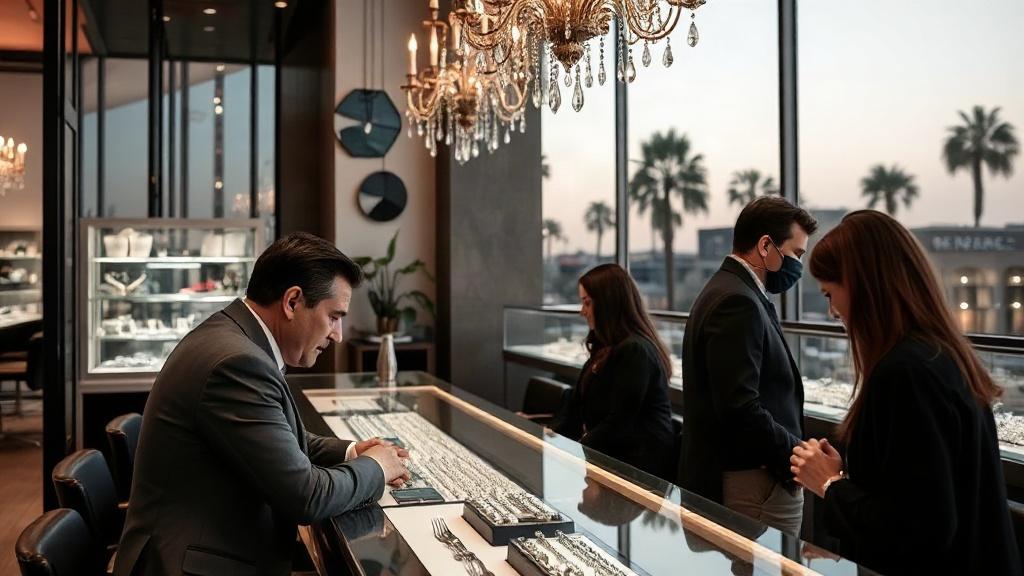
Why Beverly Hills is its own jewelry market
Beverly Hills is not simply another place to sell jewelry. It has a concentration of luxury retailers, private clients, estate specialists, and collectors that changes the entire rhythm of the market. Pieces that might be average in another setting can command real attention here if they carry the right name, rarity, or visual presence.
There is also a cultural element at play. In Beverly Hills, luxury is not treated as an occasional indulgence; it is part of the local language. Buyers in this environment are accustomed to evaluating high-end watches, diamonds, signed jewelry, and rare gems with speed and precision. That does not mean every transaction is easy, but it does mean the standards are high and the market is rarely casual.
For sellers, that can be good news. A knowledgeable buyer in this area may recognize value that a generalist would miss, especially when a piece has estate significance, designer pedigree, or unusual craftsmanship. The flip side is equally true: if a piece is damaged, altered, or poorly documented, the buyer will notice immediately.
What experienced buyers are really evaluating
When people picture a jewelry sale, they often imagine a buyer glancing at a ring and naming a price based mostly on weight and sparkle. In reality, serious buyers use a layered process. They look first at the obvious factors, then at the parts that influence resale value, and finally at the details that can move a piece from ordinary to desirable.
At the center of that evaluation is quality. Diamonds are assessed for cut, color, clarity, and carat weight, but those grades are only part of the story. A well-cut diamond with lively performance can be more appealing than a larger stone that appears dull. Colored gems introduce their own set of concerns, including origin, saturation, treatment, and shape. Metal matters too, since platinum and gold carry different value patterns and suit different kinds of jewelry.
Brand recognition can shift the equation as well. A signed piece from Cartier, Van Cleef & Arpels, Harry Winston, Tiffany & Co., or Bulgari is not treated the same way as an unsigned item of similar materials. The maker’s name can raise interest, especially if the design is sought after or the piece comes with original documentation. In Beverly Hills, that name recognition often carries real financial weight.
The role of condition and originality
Condition is one of those factors sellers underestimate until they see the effect on pricing. A piece with original prongs, untouched settings, and intact hallmarks usually has more appeal than one that has been heavily repaired or reworked. Even a small change, like replacing a clasp or resetting stones, can alter the piece’s desirability in the resale market.
Originality matters because collectors and luxury buyers often value authenticity of design as much as the materials themselves. A vintage bracelet that still has its original box and papers can feel far more complete than the same bracelet with no history attached. If a piece has been resized, polished aggressively, or altered to suit a trend, that may reduce what a buyer is willing to pay.
That said, not every repair is a problem. A careful restoration performed by a respected jeweler may preserve value, especially for older pieces that need structural support. The difference is that buyers want to know exactly what has been changed. Transparency goes a long way in this market.
Types of jewelry that attract attention
Some categories consistently draw interest from buyers in Beverly Hills because they fit the local luxury landscape. Diamond engagement rings remain in demand, but the market for them is highly specific. The most compelling pieces tend to have strong center stones, excellent make, and settings that still feel relevant or collectible.
Signed designer jewelry is another major category. A necklace, cuff, or pair of earrings from a top house can be attractive even when the stones themselves are not extraordinary. The design language and brand cachet create an appeal that goes beyond raw material value. Vintage and estate pieces also perform well when they have distinctive character or historical style.
Colored gemstone jewelry can be especially compelling when it is exceptional rather than merely decorative. Sapphire, emerald, and ruby pieces with fine color and strong craftsmanship often catch serious attention. Pearls, too, can still have value when the quality is high and the presentation is elegant, particularly in vintage or couture-inspired designs.
Pieces buyers often ask about first
- Diamond rings and engagement rings
- Diamond necklaces, tennis bracelets, and earrings
- Signed designer pieces from major luxury houses
- Vintage and estate jewelry with original documentation
- High-quality colored gemstone jewelry
- Luxury watches and mixed jewelry collections
That list is not exhaustive, but it reflects the pieces that most often prompt serious conversation. The strongest interest usually goes to items that combine quality with desirability, not just intrinsic material value. A beautiful piece that aligns with current collector tastes can outperform a heavier one with little style appeal.
How the buying process usually works
Many sellers want to know what happens after they walk into a buyer’s office or showroom. The process is usually straightforward, but the pace depends on the type of piece and the buyer’s level of specialization. First comes an initial inspection, then a more detailed assessment, and finally an offer if the piece fits the buyer’s criteria.
In some cases, the evaluation is done on the spot. A diamond ring with clear credentials and straightforward grading can be assessed quickly. In other cases, the buyer may need time to verify hallmarks, compare market data, or authenticate a signature piece. That is especially true for higher-value items, where even small differences can affect the offer.
The best buyers explain the process clearly. They do not hide behind jargon or rush the seller through the room. If a piece requires testing, weighing, or authentication, the seller should understand why. A transparent process is not only more comfortable; it is a sign that the buyer is confident in their own expertise.
Typical steps in a professional appraisal-to-offer process
- Visual inspection and initial categorization
- Material testing for metal and stones
- Review of hallmarks, signatures, and documentation
- Authentication of brand, era, and craftsmanship when relevant
- Market comparison and resale analysis
- Presentation of an offer or range
Not every transaction follows every step, but this is the general shape of it. Buyers who work at a high level tend to slow down where accuracy matters and move quickly where the piece is straightforward. That balance is what sellers should look for.
What makes one offer better than another
Two buyers can look at the same necklace and give very different offers, and that does not always mean one is being unreasonable. They may simply have different channels for resale, different appetite for inventory, or different confidence in a brand or style. The highest offer is not always the best deal if the buyer is vague, slow to pay, or unwilling to explain the numbers.
What matters is how the offer is built. Some buyers focus on melt value and stone quality, which is standard for many unbranded pieces. Others factor in retail resale potential, especially for signed jewelry or pieces with collector interest. If the buyer specializes in a category, they may be able to pay more because they know where and how they can resell it efficiently.
Sellers should also pay attention to the terms, not just the dollar figure. Immediate payment, secure handling, and a clean transaction can matter as much as a few extra percentage points. In a market as polished as Beverly Hills, professionalism is part of the value equation.
How to prepare jewelry before meeting a buyer
Preparation does not mean overpolishing everything until it loses character. It means presenting the piece in a way that lets the buyer evaluate it accurately. A clean item with its documentation organized and its history clear is much easier to assess than one tossed into a drawer with old receipts and loose stones.
If you still have original boxes, papers, certificates, or warranty cards, gather them. For designer pieces, packaging can matter more than people realize. GIA reports, appraisals, and previous repair records can also help establish the story of the piece. Even if the paperwork is outdated, it can still provide useful clues.
Light cleaning is reasonable, but aggressive home polishing can do more harm than good. Many sellers assume a piece should look as shiny as possible before a meeting. In practice, buyers need to see prongs, settings, wear patterns, and natural aging. Overcleaning can blur those details.
Helpful items to bring
Item | Why it helps |
Original box or pouch | Supports authenticity and brand value |
Certificates or lab reports | Confirms stone grading and identity |
Receipts or invoices | Establishes purchase history and provenance |
Repair or service records | Shows how the piece has been maintained |
Any missing parts | Prevents surprises during evaluation |
A simple rule helps here: bring anything that tells the truth about the piece. Buyers appreciate clarity more than theatrics. When the jewelry is well documented, the conversation usually becomes more efficient and more productive.
Why documentation can change the number
Documentation is not decorative; it can materially affect value. A diamond with a reputable grading report is easier to price than one without it. A signed necklace from a luxury house with receipts, service papers, and original packaging may stand out immediately from a comparable piece with no paper trail.
Provenance can matter even more with estate jewelry. If a piece came from a notable collection, a respected estate, or a known source, that history can add desirability. Buyers still need to verify everything, of course, but the presence of credible documentation can shorten the distance between curiosity and offer.
It is worth noting that a lack of papers does not make a piece worthless. Plenty of valuable jewelry changes hands without full documentation. But in a market where precision is prized, paperwork often removes doubt, and doubt is expensive.
How to spot a serious buyer
The difference between a serious buyer and a merely polite one shows up quickly. Serious buyers ask specific questions, handle pieces carefully, and explain what they are seeing. They do not rush to an offer before checking the important details. They also understand that a seller may want time to think, compare, or verify the process.
Look for depth, not flash. A luxurious office or a nice name on the door does not guarantee competence. A buyer with real experience will talk about stone quality, market behavior, and resale channels in a way that feels grounded. They know what they buy, why they buy it, and what they are likely to pay for it.
Trust also matters. In Beverly Hills, where many transactions involve significant value, the right buyer should make you feel informed rather than pressured. If the conversation is filled with vague claims or hard-selling tactics, that is a reason to step back. Good buyers do not need to push; their expertise does the work.
Signs you are dealing with a reputable buyer
- They explain the evaluation process clearly.
- They can discuss stones, settings, and makers in detail.
- They provide a written offer or clear terms.
- They welcome questions without becoming defensive.
- They have a secure, professional setting for the transaction.
These are practical signs, not marketing slogans. A buyer who operates this way is usually easier to work with and less likely to create surprises later. That matters when the piece involved has emotional as well as financial weight.
The role of estate jewelry in Beverly Hills
Estate jewelry has a special place in this market because it often brings together style, history, and craftsmanship in a way modern pieces sometimes do not. Buyers in Beverly Hills tend to be open to estate items if they are well made and visually compelling. Vintage Art Deco rings, midcentury brooches, and signed pieces from the 20th century can all attract serious interest.
What makes estate jewelry appealing is not just age. It is the combination of rarity, condition, and design relevance. A piece from a major era with original stones and intact detail can offer something collectors want: character that cannot be copied with a new setting. That character often carries value well beyond the materials alone.
Estate pieces can also be more complicated to evaluate. Repairs may be old, stones may have been replaced, and hallmarks may have worn down over time. A skilled buyer knows how to read those signs without overreacting. In this part of the market, experience is not optional; it is the whole game.
Common mistakes sellers make
One of the most common mistakes is assuming every piece should be judged only by its original retail price. Luxury jewelry does not work that way. Retail pricing includes design, branding, store overhead, and presentation, while resale pricing reflects what a buyer can realistically place back into the market. Those numbers are rarely close.
Another mistake is hiding damage or prior work. Buyers usually find it anyway, and when they do, trust can take a hit. It is far better to mention a repair, missing stone, or resize upfront than to pretend it does not exist. Honesty may lower the first impression, but it prevents bigger problems later.
Sellers also sometimes assume all buyers are interchangeable. They are not. A buyer who specializes in signed vintage jewelry will likely value a piece differently from someone who focuses mostly on gold and diamonds by weight. Matching the right item to the right buyer can make a real difference in outcome.
Negotiation without the theater
Negotiation in this market is usually quieter than people expect. There may be some back-and-forth, but the best discussions feel measured, not dramatic. If you know what you are selling and understand what affects value, you will be in a much better position to judge an offer calmly.
It helps to compare more than one buyer when possible. That does not mean turning every meeting into a bidding war. It means getting a sense of how different specialists evaluate the same item. Once you see the pattern, the market becomes easier to read.
Still, the goal is not to squeeze every last dollar out of a sale at the expense of certainty. A fair offer from a buyer with a clean process may be more appealing than a slightly higher number from someone who feels slippery or disorganized. In jewelry sales, confidence is valuable, but peace of mind is too.
What luxury buyers in this area often appreciate
Buyers in Beverly Hills tend to notice the things that less experienced eyes overlook. They appreciate symmetry, craftsmanship, quality mounting, and design integrity. They also tend to notice when a piece has been well cared for over time, even if it is not brand new or flawless.
Presentation matters, but not in a superficial way. A piece that is stored properly, documented carefully, and brought in cleanly tells the buyer something about the owner. It suggests the item has been respected. That does not guarantee a higher number, but it sets the tone for the conversation.
Many buyers also appreciate honesty about why a piece is being sold. Sometimes it is an inheritance, sometimes a change in taste, sometimes a financial decision. The reason itself does not determine value, but a straightforward conversation can make the transaction smoother and more human.
When timing matters
The timing of a sale can influence interest, especially for pieces tied to current trends. Certain cuts, designer names, or vintage styles may be more in demand at one moment than another. Market conditions, seasonal buying patterns, and fashion cycles all play a role, though not always in ways that are easy to predict.
That said, fine jewelry is not the same as fast-moving consumer goods. A great piece usually retains appeal because it is anchored in quality and craft. Time can be a factor, but it is rarely the only one. A well-made diamond bracelet or classic pair of earrings can remain desirable for years.
If you are not under pressure to sell immediately, it can be worth taking a little time to understand the market. But if the right buyer is in front of you and the offer is strong, waiting for a hypothetical better one can be a gamble. There is no universal answer, only the context of the piece and your goals.
Why relationships matter in this business
In a place like Beverly Hills, reputation travels fast. Buyers who treat people fairly tend to attract repeat clients, referrals, and stronger inventory. That matters because many of the best pieces change hands through trust, not ads. A good transaction often becomes the beginning of another one.
For sellers, that means the buying experience is about more than a single price. You are also evaluating whether the buyer handles valuable items with care, respects your time, and communicates clearly. Those qualities may not show up on a spreadsheet, but they shape the entire experience.
This is one reason fine jewelry buyers in Beverly Hills often build long-term relationships with sellers, estates, and collectors. The market rewards consistency. People remember who was fair, who was precise, and who made the process less complicated than it needed to be.
A practical checklist before you sell
If you are preparing to sell a piece, a simple checklist can save time and reduce stress. You do not need to become an expert overnight, but a little preparation helps you ask better questions and recognize a serious offer when you see one. The more clearly you understand your own piece, the easier the meeting becomes.
Start by identifying what you have. Is it designer signed, antique, estate, or modern? Do you know the stones, the metal, and whether any certificates exist? That basic information gives the buyer a place to begin and keeps the conversation focused.
Then think about your goal. Are you seeking the fastest sale, the strongest price, or simply a professional opinion? Different buyers can serve different needs, and knowing your priority will help you choose wisely. In a market full of polished presentation, clarity is one of your strongest tools.
Quick preparation checklist
- Gather boxes, papers, and receipts.
- Note any repairs, resizing, or missing stones.
- Separate pieces into groups by type or maker.
- Set a realistic goal for the sale.
- Meet with a buyer who specializes in your type of jewelry.
That list may seem simple, but it covers the essentials. The better prepared you are, the easier it is to spot whether a buyer is truly seeing the value in front of them. And in a place where luxury is measured closely, that matters.
What sets the strongest buyers apart
The strongest buyers combine technical skill with restraint. They know when to move quickly and when to slow down. They can tell the difference between a beautiful object and one that has meaningful resale potential, and they explain that difference without hiding behind jargon.
They also understand that fine jewelry carries emotional weight. A ring may be just another line item to one person and a family memory to another. The best buyers respect that without letting sentiment cloud the valuation. That balance is hard to fake and easy to recognize once you have seen it.
In Beverly Hills, where expectations are high and the market is crowded with polished language, that kind of grounded expertise stands out. It is not about dramatic promises. It is about knowing the piece, knowing the market, and treating the transaction like something that deserves care.
For anyone exploring the world of fine jewelry buyers in Beverly Hills, that is the real standard to keep in mind. The right buyer will see the details, speak plainly, and make the process feel clear from the first look to the final offer. When that happens, a valuable piece finds the right next chapter, and the sale feels less like a gamble and more like a well-handled handoff.